


You know those moments when you realize the world is much bigger than you’d ever imagined? I remember being in my WSET 2, and the instructor mentioned that there’s a wine in Italy made by passing an already-fermented wine back over the leftover skins of another wine. Wait, what?
The first Valpolicella Ripasso I remember drinking was many years ago in Montreal, when someone brought a bottle to our monthly poker game. At that point, my wine knowledge barely extended beyond “red or white.” I don’t remember exactly what Valpolicella Ripasso it was, but I liked it, and that was about as far as my analysis went.
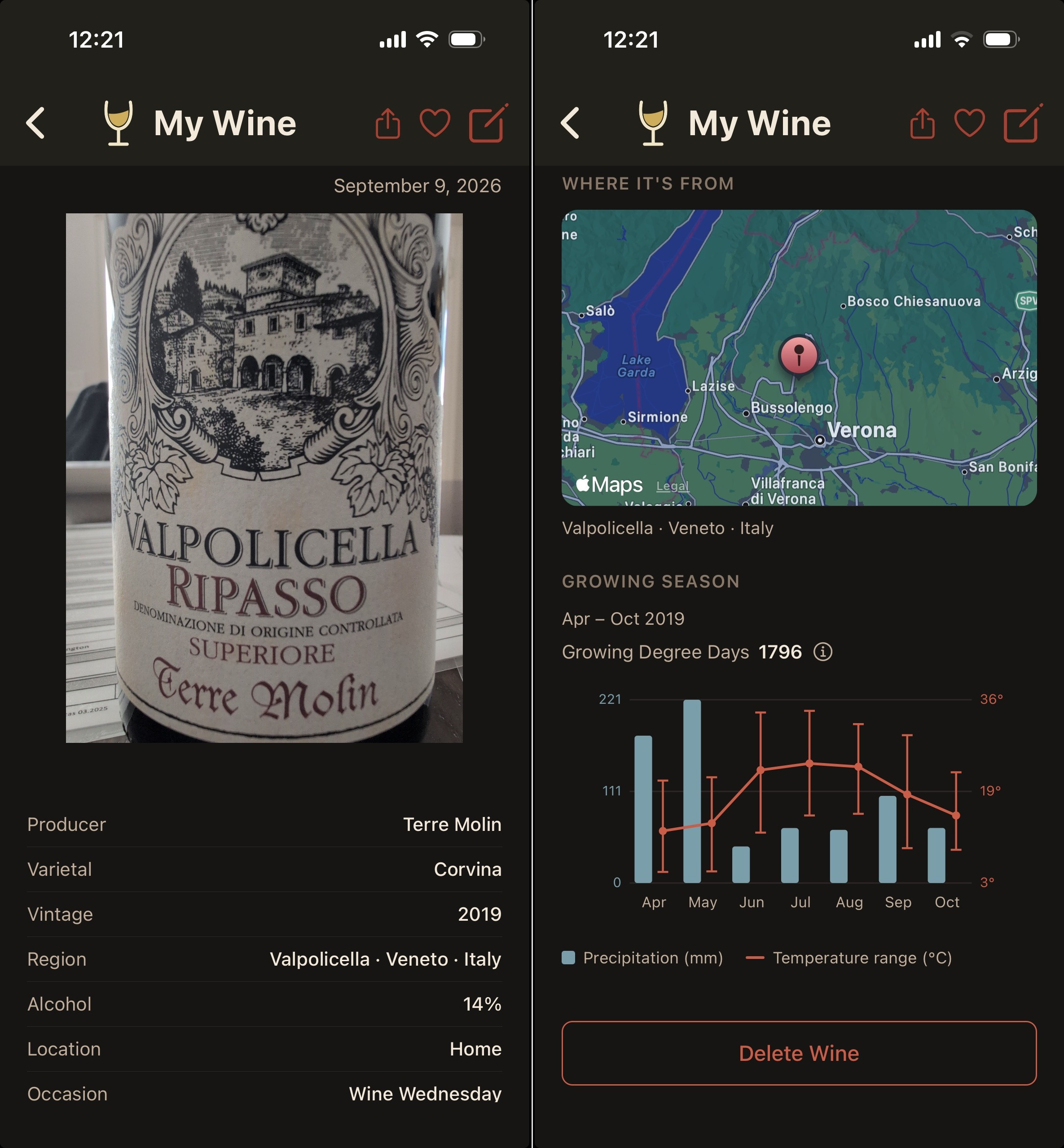
Last week, for Wine Wednesday (which is just what Katie and I call opening a bottle midweek and working through the WSET Systematic Approach to Tasting together), we opened a bottle of 2019 Terre Molin Valpolicella Ripasso Superiore.
Here are my notes:
Appearance: Medium ruby trending to garnet – still bright, but starting to have a brick color
Nose: Pronounced intensity (Katie thought medium+, but I could smell it across the table)
Palate: Dry, medium+ acid, medium- tannin, medium alcohol (it’s actually high: 14%), medium body, medium flavor intensity, medium+ finish
Aroma / flavor characteristics: Cinnamon, star anise, black cherry (nose), red cherry (palate), cooked strawberry, prune, stewed fruit, white pepper, a touch of tobacco, something a bit vegetal (Katie suggested oregano). Neither of us detected much oak (while this type of wine is usually aged in oak, the importer notes I found for this particular bottling only mention steel and concrete).
Conclusions: Good quality. You don’t have to drink it now, but I wouldn’t hold it much longer – 7 years is smack in the middle of the drinking window for this style. Still bursting with fruit.
So, what is Valpolicella Ripasso?
I’ve heard it called a “junior Amarone” or “baby Amarone.” I’d happily drink Amarone all the time, but it’s too expensive, so this is a good budget-friendly alternative.
Valpolicella Ripasso DOC is in the Veneto region of Northern Italy. The DOC was established in 2009 with production rules taking effect in 2010. The principal red grape varieties are Corvina and Covinone, along with Rondinella and, optionally, Molinara.
Ripasso means “re-passed,” and that’s exactly what happens. To make Ripasso, finished Valpolicella wine is combined with the drained, unpressed grape skins (called pomace, or marc) left over from making Amarone della Valpolicella or Recioto della Valpolicella. This triggers a secondary fermentation, which must last a minimum of 3 days. This process adds flavor complexity, richer color, and a bit more alcohol. The wine then must be aged for at least a year, often in oak barrels, before release. For the Superiore designation, the alcohol level must be at least 13%.
This all works because Amarone is made using the appassimento process. In this method, the grape clusters are harvested and then dried inside on racks or mats for a few months, losing water weight and concentrating everything else: sugar, acid, and flavor. Even after fermentation, the leftover skins still contain a high concentration of unfermented sugars and active wild yeasts, which kicks off the second, shorter fermentation of the base Valpolicella. So, basically, to get a Valpolicella Ripasso, you have to first make a regular Valpolicella and an Amarone. All that work for a wine you can typically get for under $30!
If you’ve never tried one, Valpolicella Ripasso is a delightful entry point to Italian reds. It’s rich enough to feel like an occasion, but priced right for a random Wednesday (the bottle we drank runs about $20). If it showed up at poker night these days, I’d still enjoy it just as much. But I’d be insufferable, explaining the whole process to the table while everyone waits for me to hurry up and deal the cards.