


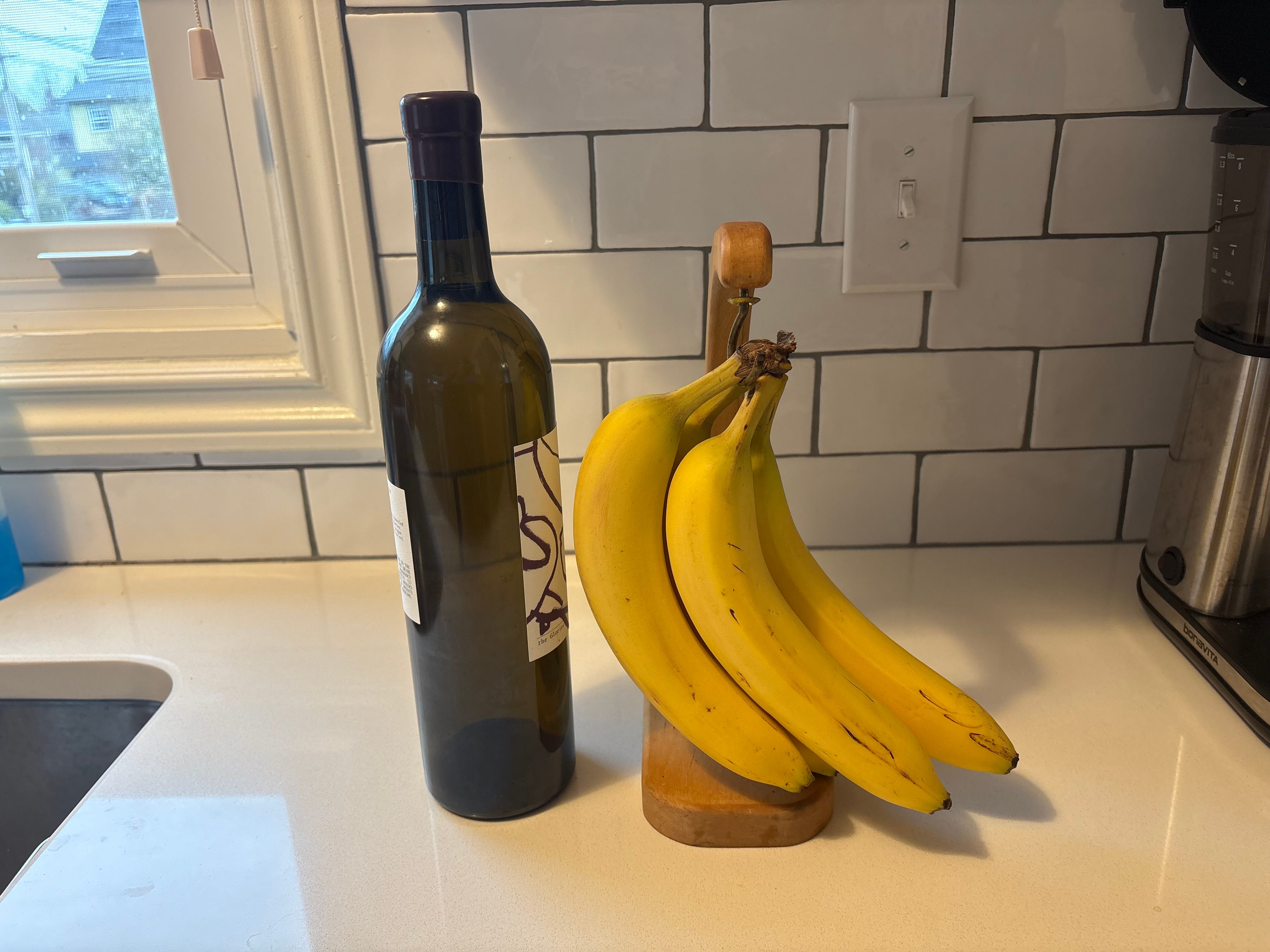
This week in our tasting group, we had a 2022 Chianti that smelled like ripe bananas. What?!?
To be honest, I didn’t get it immediately, but as soon as someone else mentioned it, it was all I could smell (the power of suggestion is a topic all its own!).
I’d encountered banana before in white wines, Beaujolais Nouveau, and once memorably in a blueberry wine. But never in a Chianti. I had to figure out what was going on.
The components of wine aromas
Wine aromas come from organic compounds that can originate from the grape varietal (primary aromas), the winemaking process (secondary aromas), and aging (tertiary aromas). There are many types of these compounds, but esters are the biggest contributor to most fruit and floral aromas. Yeast produces esters during fermentation as it converts sugar into alcohol.
The banana smell comes from an ester called isoamyl acetate, which forms when isoamyl alcohol combines with acetic acid (basically vinegar). Isoamyl acetate is also known as “banana oil,” and it’s what’s used in all of your favorite banana-flavored products, from banana candy to banana Lip Smackers.
Factors that impact banana aromas in wine
Not all fermentations create the same amount of isoamyl acetate. Some yeast strains create more than others – for example, the yeast commonly used in Beaujolais Nouveau generates high levels of it. Carbonic maceration, which is a hallmark of Beaujolais Nouveau, increases isoamyl acetate production. Together, these factors explain why banana (along with bubble gum and candy) is a key tasting note for these wines.
Fermentation temperature also matters. Higher fermentation temperatures produce isoamyl acetate faster, but lower fermentation temperatures produce it in higher concentrations. Cooler fermentations are less volatile, so more of these esters remain in the final wine. That’s why you often find banana in aromatic white wines, which are typically fermented at cooler temperatures.
Banana also tends to show up more in young wines because these esters break down over time.
Becoming a wine sleuth
As I work to improve my wine tasting skills, I’m trying to become a better wine sleuth. Rather than just noting the aromas (though I’m definitely still working on that!). I’m starting to ask deeper questions, like “What does this tell me about the winemaking?” “Why might this note appear here and not in a similar wine?” Each aroma (especially the unexpected ones) is a clue, and putting those clues together is what makes wine tasting a type of detective work.
So, what about that Chianti? Chianti doesn’t typically go through carbonic maceration or particularly cool fermentation. So, my best guess is that the banana aromas were due to the specific yeast strain that was used and the fact that it was relatively young.
This experience also helped me spot another area for improvement – next time, I’ll take a picture of the bottle so I can research the producer’s methods later. 🤦♀️ Onward and upward!