


I’m in Indonesia right now, sailing between the Mentawai Islands and Pulau Nias, and over the last couple of weeks we’ve been exploring tropical rainforests, including Ujung Kulon National Park.
It’s hard to overstate how wet this place is.
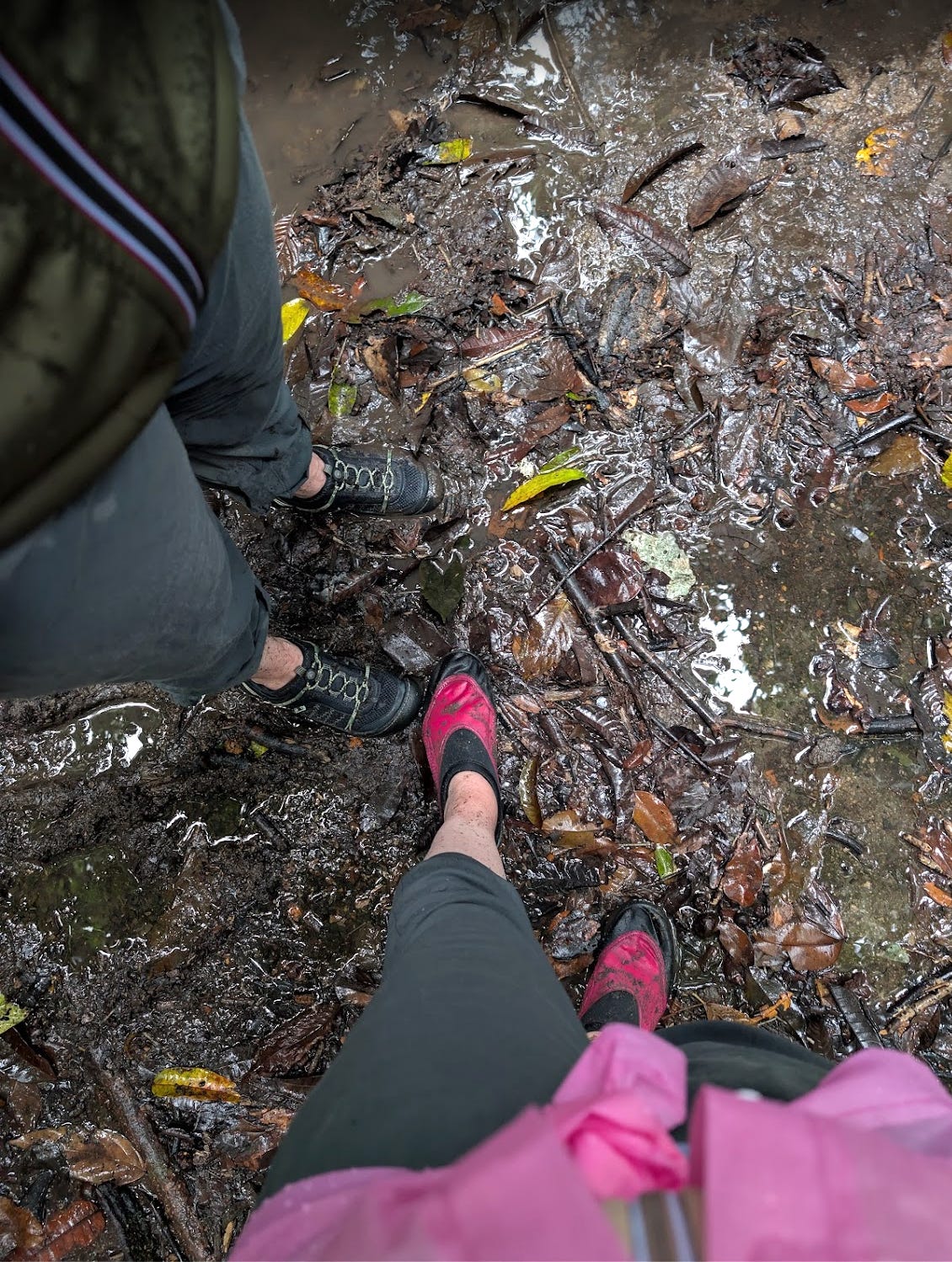
Periodic torrential rain. Trails turn into rivers. You walk through inches of mud. Under the canopy, the light is dim, and the soundtrack is constant: dripping water and the crash of surf from a beach you can’t see.
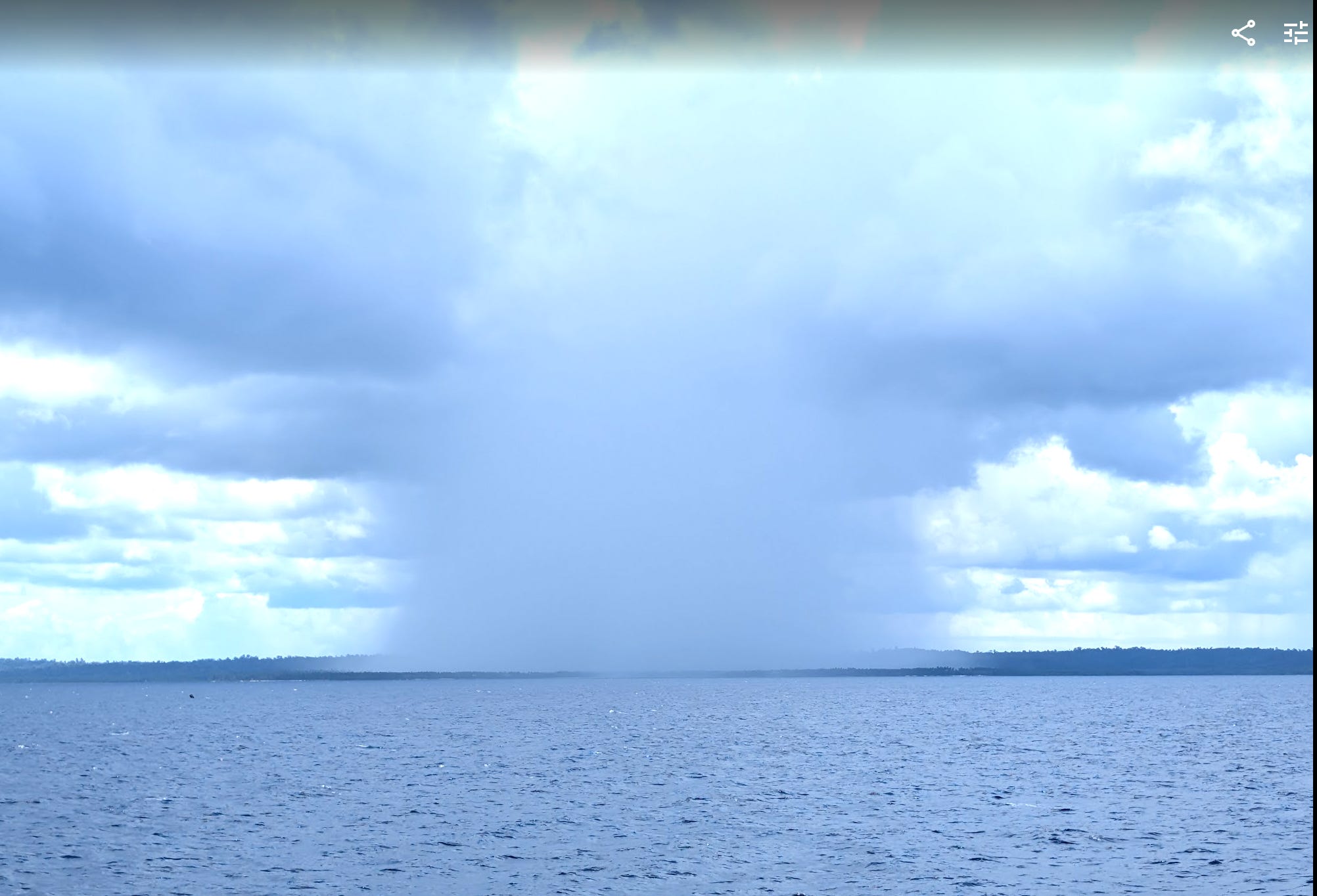
What surprised me most is how nurturing it felt.
Not oppressive and not threatening. Just part of a whole. The forest floor felt alive in the same way that “forest floor” aromas show up in wine: humus, decay, renewal, all cycling together.
At the same time, I’ve been deep in my diploma studies, learning about how water moves through grapevines. An onboard lecture about tropical rainforests combined with the experience of the mud and the humidity, brought a new dimension and texture to the coursework.
The plant physiology reset
My background is much more in animal and human physiology. In those systems, fluid moves because something pushes it. A heart. Muscles. Pressure generated by force.
So when I thought about plants, I had always vaguely imagined water being pushed upward from the roots, like pressure in a pipe.
That’s not how it works.
In vascular plants, water is pulled upward, not pushed. Evaporation from tiny pores, called stomata, mostly on the underside of leaves, creates tension. That tension pulls water up through the xylem from the roots like a straw. Nutrients dissolved in that water come along for the ride.
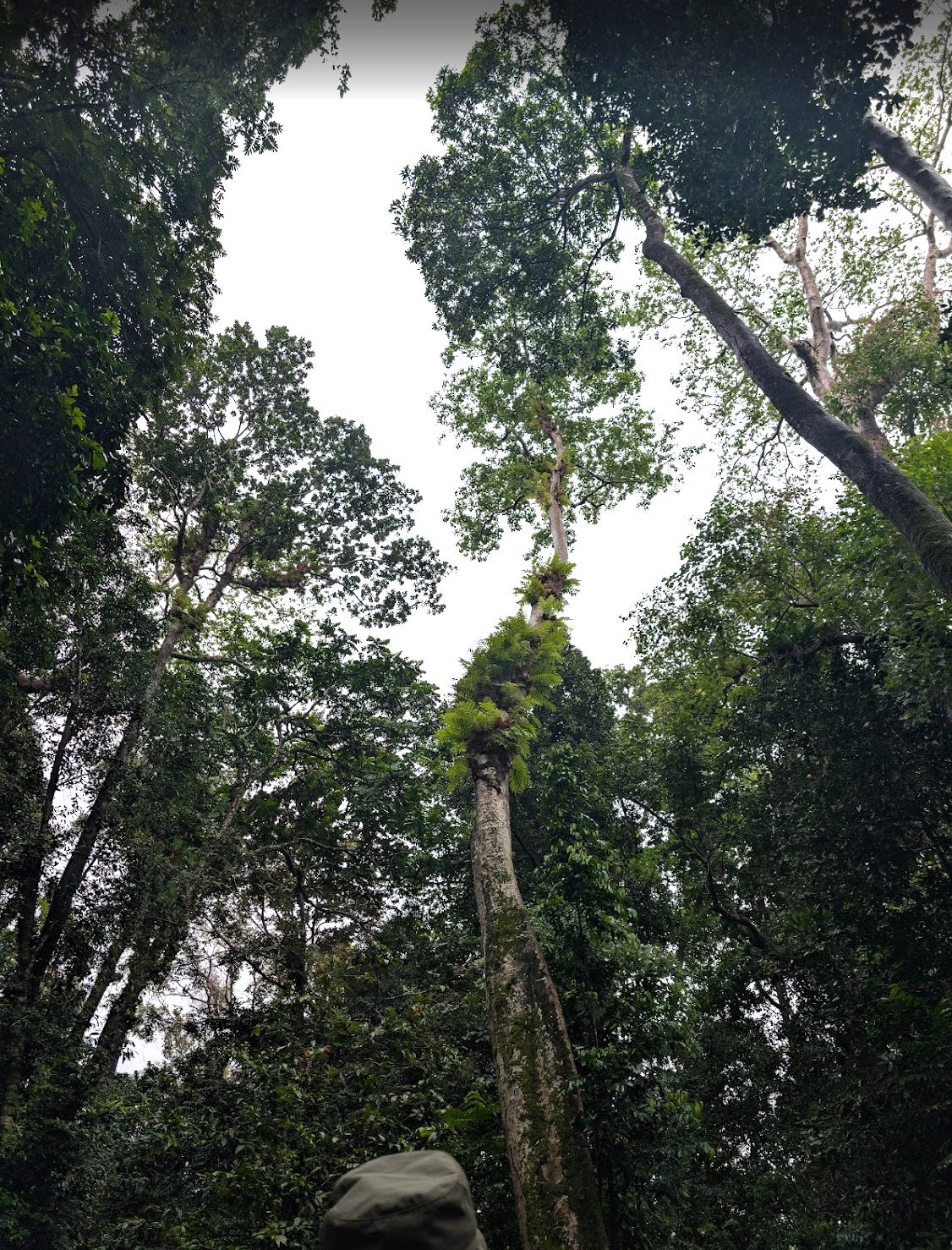
No pump. No force. Just evaporation and physics.
Same strategy, wildly different scales
Here’s the part that made me thoughtful: that same invisible force
moves water a few feet up a grapevine
and hundreds of feet up massive rainforest trees and palms
The scale changes dramatically but the mechanism does not.
Standing in a rainforest I’ve never experienced before, realizing that the same process is at work in vineyards I know well, gave me an unexpected sense of connection. This wasn’t an alien system. It was familiar, just amplified.
Evapotranspiration wasn’t an abstract term anymore. It was the reason the air felt thick. The reason clouds form. The reason rain keeps returning.
That made the rainforest feel deeply resilient to me. Not delicate, but cyclical.
Grapevines are climbers (and that matters)
Another surprise from my studies is that grapevines aren’t desert loners. They’re woodland plants, and they’re climbers.
I’d never really internalized the purpose of all those tendrils beyond “support.” In Ujung Kulon, we saw climbers everywhere: strangler figs, Monstera, vines using established trees as scaffolding to reach light.
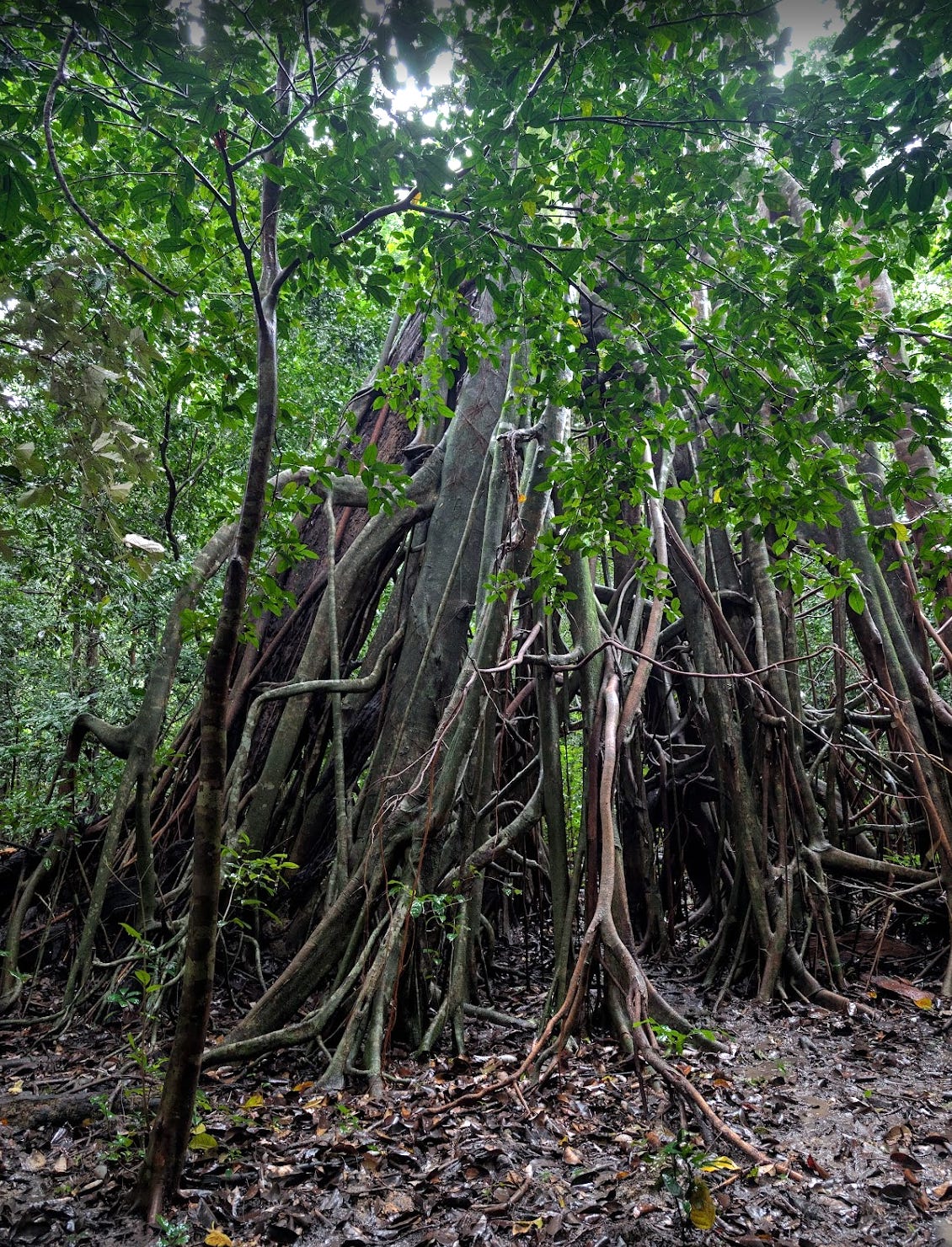
Grapevines do the same thing.
Seeing this behavior in a rainforest made vineyards feel a little austere by comparison. Highly controlled. Artificial. Efficient, yes, but stripped of the collaboration these plants evolved with.
It made me curious. What would grapes taste like if they were grown in closer relationship with their ancestral peers? How does vitis vinifera behave in a more woodland-like system? What do we gain, and what do we lose, through monoculture and strict training?
Pull, not push
One final thing that’s been sticking with me.
“Push” systems feel effortful. They fail when force fails. They require constant input.
“Pull” systems feel different. Evapotranspiration relies on something basic and passive, like chromatography or capillary action. It’s sustainable precisely because it doesn’t require constant exertion.
That distinction feels important, not just for how plants move water, but for how we think about systems more broadly.
The rainforest doesn’t push.
The grapevine doesn’t push.
They rely on cycles and gradients.
Walking through mud under a dim canopy, learning about grapevines thousands of miles from a vineyard, I didn’t expect to come away with a clearer picture of how connected these systems are.
But here we are.
And now, when I select a wine from the extensive glass list on board the ship, I’m also thinking about rain, leaves, humidity, and the cycles that tie it all together.