


I’ve been thinking lately about the many ways there are to describe wine.
Take, for example, Tempranillo.
My WSET Level 2 textbook describes Tempanillo as a medium- to full-bodied wine, with medium acidity, medium tannins, and with red and black fruit flavors. Technically accurate, yes, but not particularly interesting or even unique – the same notes apply to many Merlots.
Nick Jackson’s book Beyond Flavor, written to help people become better tasters, says that the defining characteristic of Tempranillo is chalky tannins you feel in your cheeks. I know this information will be very helpful for my tasting exams, and it’s more useful than “medium tannins,” but I’m still trying to figure out what it means.
On the complete other end of the spectrum, I once had the pleasure of taking an online class on wine and culture from a well-known industry leader who described Tempranillo as tasting like what it feels like to be at a bull fight on a hot day in Spain, surrounded by sweaty men oozing with testosterone. Even as a queer woman who takes no pleasure in animal cruelty, I gotta say, that’s electric! Memorable! I want to taste what’s in that glass!
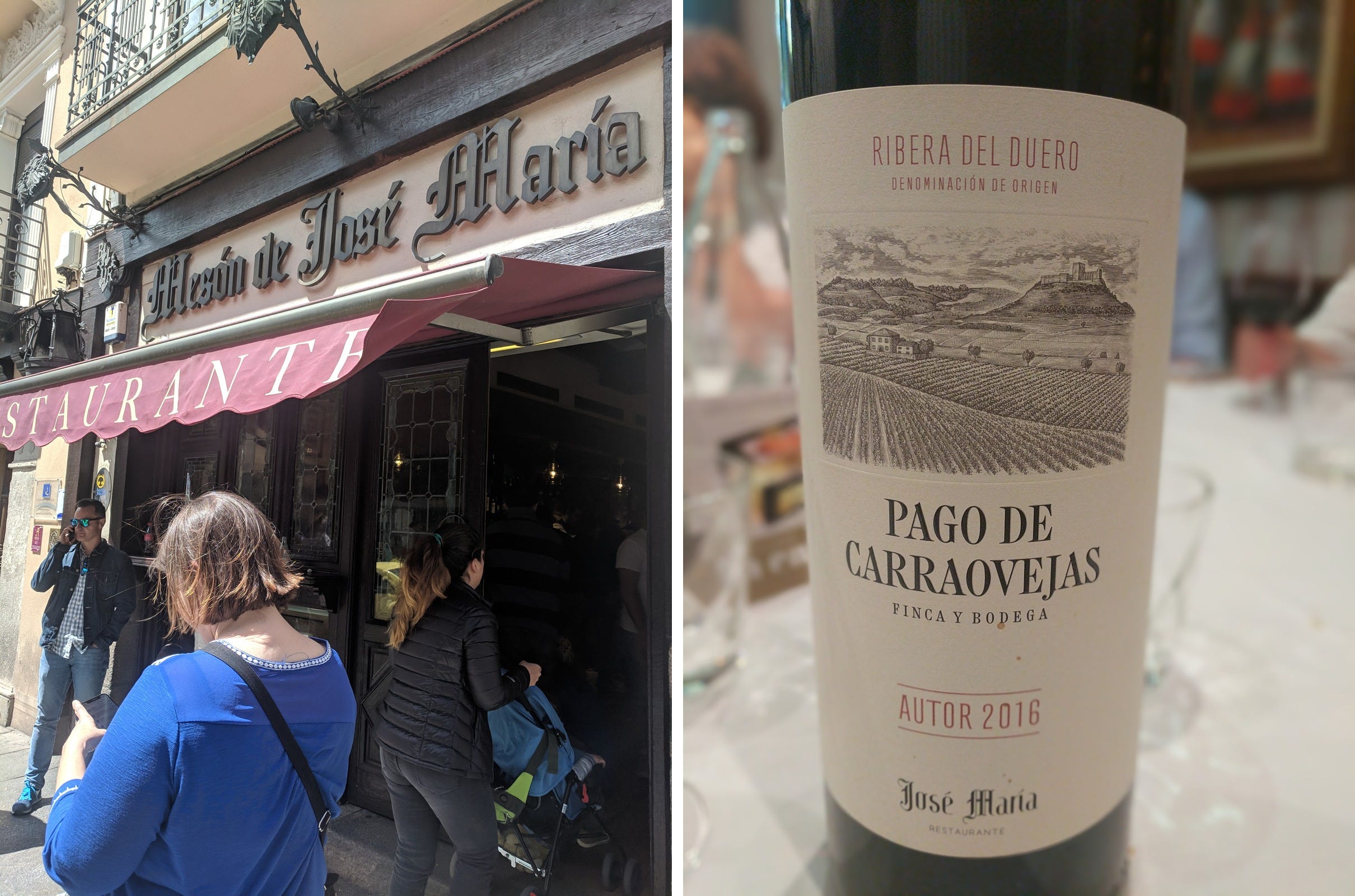
To me Tempranillo tastes like my first wine trip to Spain, especially our visit to Bodega Pago de Carraovejas in Ribera del Duero. We took a tour, and then sat down to an incredible lunch with wine pairings. When we found out that there was a wine we couldn’t taste because 100% of the production went to a restaurant in nearby Segovia, we rerouted our trip to visit that restaurant. I’ve been to Spain a couple of times, and Tempranillo tastes like everything I love about it – the landscape, the architecture, the history, the people, the food – it tastes like happiness. If I had to pick a last-meal wine, I’d take a Tempranillo from Ribera del Duero.
I study wine, and I’m working on the technical vocabulary and learning to identify what’s in my glass. But I try not to lose sight of the other half (or, honestly, the other 90%) of what I like about wine – the pleasure, the emotional charge, the ability for it to transport you to a very specific place and time. Almost any wine can taste incredible in the right company. And almost any wine is hard to enjoy – hard even to taste – if you’re stressed, exhausted, or down. No amount of technical excellence in the bottle can make up for that.
I work at a small urban winery in Portland, OR, and we get a wildly mixed crowd. Occasionally, people want the technical version: the production process, which vineyards we source from, what kind of oak, etc. Or to talk tasting notes: fruit, tannin, acid. But most just want to enjoy a good glass of wine in a comfortable environment. My job is to figure out which version of the conversation each person wants. Usually, if someone asks for a recommendation, I point to my favorite Pinot Noir and tell them it tastes like curling up in front of a fireplace with a good book. It’s not the kind of description you’ll find in any textbook, but it’s true.