


Krista and I went to the grocery store last weekend to study wine. Not to buy it for drinking (though we did that too), but to deliberately take time checking out what’s actually on the shelves. We’re pretty familiar with the direct-to-consumer (DTC) route to market: cellar doors, wine clubs, tasting rooms. But that’s only about 20% of the wine sold in the world. The other 80% gets purchased in supermarkets.
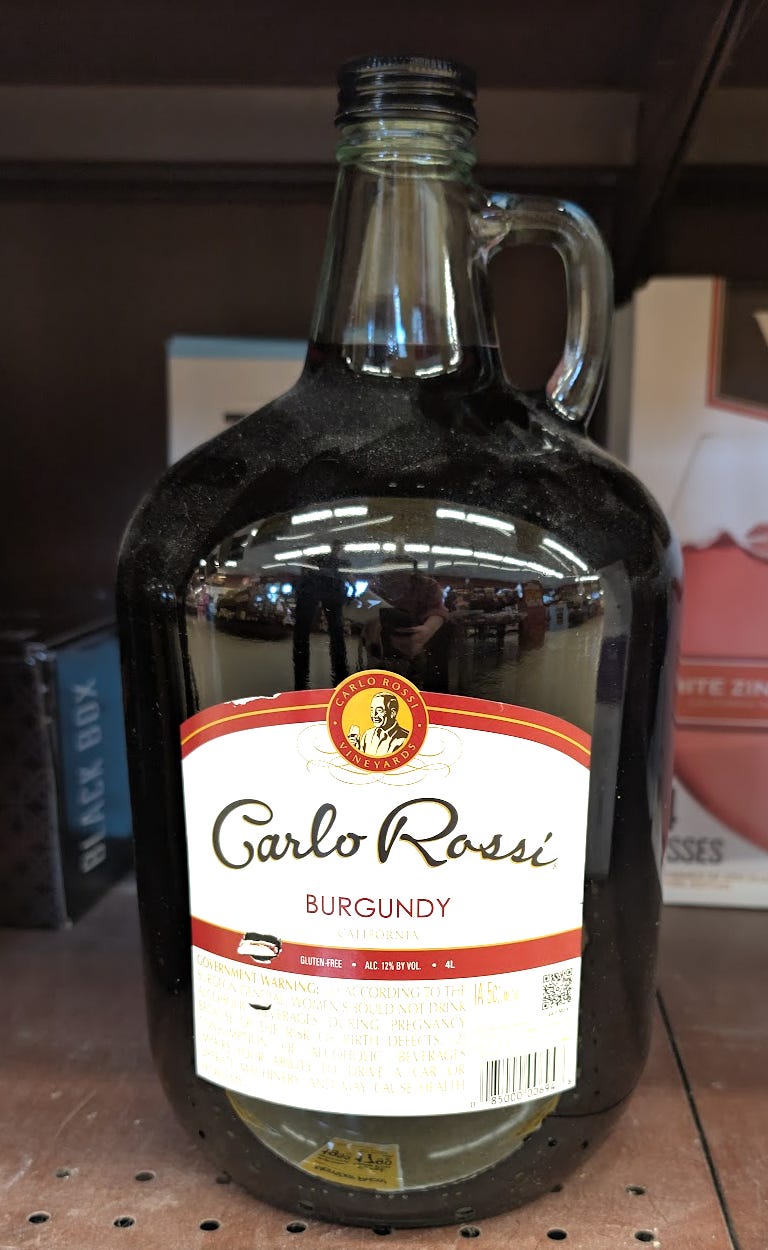
We were looking for differences in marketing strategy. Could we identify white labeled or exclusive wines? What ways might a wine differentiate itself from its shelf-mates? It was quite an education. Snoop Dogg is now the label model for 19 Crimes, a departure from their classic mugshots of people convicted of crimes and sentenced to transportation to Australia. We found bottles of prosecco textured with bubbles, and bottles with mildly suggested profanity. We found a 4L jug of Carlo Rossi Burgundy priced at $19.99. Fancy.
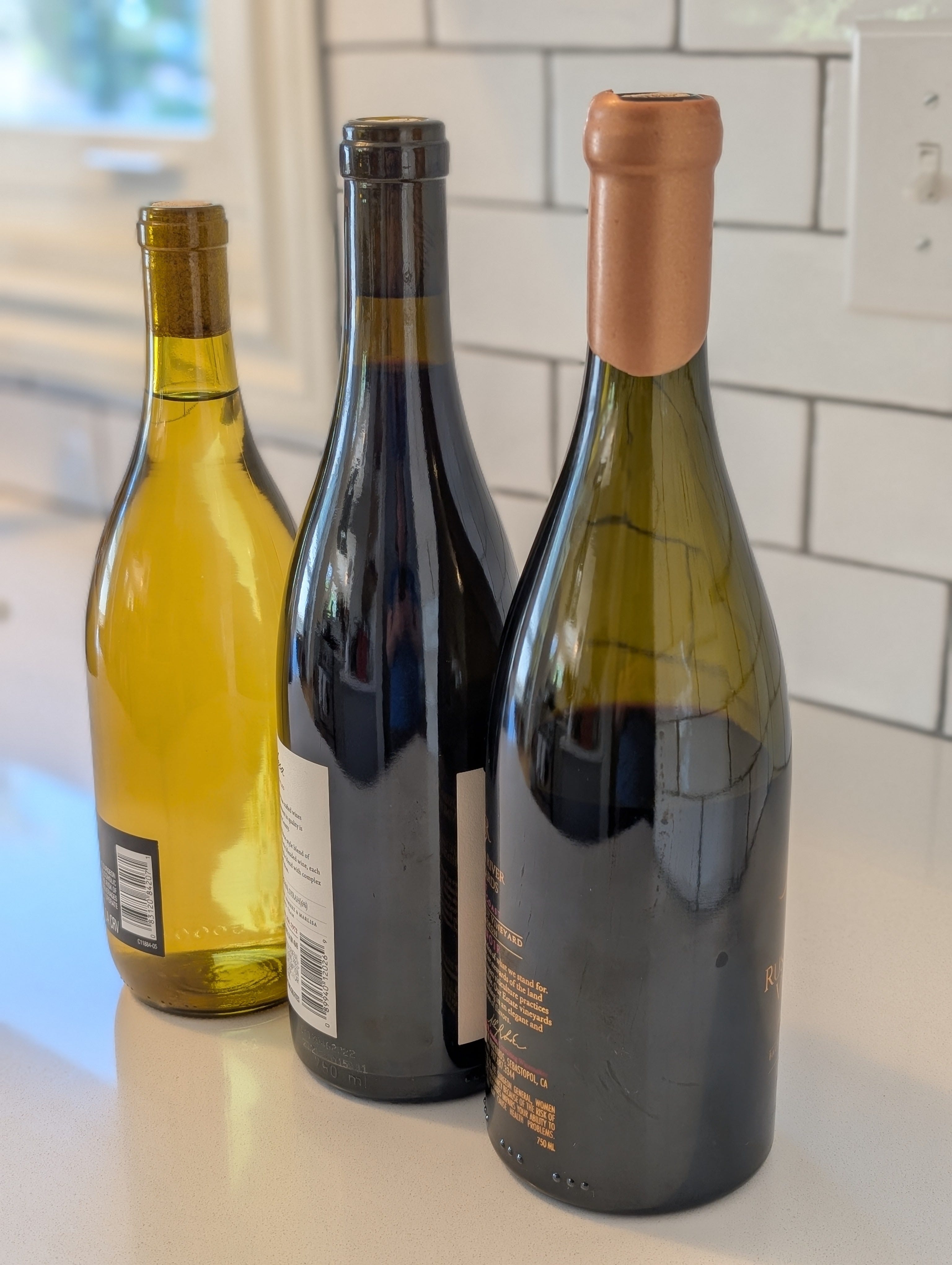
And then we found Bay Bridge Chardonnay at Fred Meyer for $3.99.
I picked it up, because absolutely we need to know what a four dollar bottle of chardonnay tastes like. The bottle felt really weird in my hand. I’ve held so many bottles of wine, and this one felt less stable, like I was going to drop it because my hands didn’t know how to hold it. The neck was so short it made me nervous. I grabbed another bottle to compare and found that the neck on the Bay Bridge was at least an inch shorter.
Also, there was no punt. That indentation at the bottom of most wine bottles was originally there to hide the edge of the glassmaking process back when bottles were hand-blown. It also stabilized the bottle. For sparkling wines, the concave base distributes CO₂ pressure more evenly. For still wine, though, it’s pure tradition and signaling. The Bay Bridge bottle had an entirely flat bottom.
I was skeptical that it actually contained the 750mL it claimed. When I got home, I measured it and found that it did!
Bay Bridge is produced by The Wine Group exclusively for Kroger. According to their website, The Wine Group is the 2nd largest supplier of wine in the world. It’s non-vintage. The cork is about a third shorter than typical corks. Everything about this bottle screamed cost optimization, and I got curious. What must their margins be? How can anyone make money off a $4 bottle of wine? The choice of smaller bottles has to be part of the answer.
Wine bottles cost anywhere from $0.50 to $3.00 each, depending on weight and features. Lightweight bottles sit at the low end of that range. Less glass means cheaper to manufacture and cheaper to transport. The stubby shape that made Bay Bridge feel so wrong in my hand delivers about 10% better pallet efficiency and roughly 14% less weight compared to a standard long neck bottle. You can fit more bottles per truck. You spend less on shipping.
Once The Wine Group created the custom mold for this stubby, flat-bottomed bottle, it would be easy for their manufacturer to produce at scale. Economies of scale matter here. The Wine Group’s sheer volume gives them leverage. I’d estimate their cost per bottle lands somewhere between $1 and $2. Selling at $3.99 means they’re making their money on quantity.
The consumer gets a bottle of wine at a lower price because of the choices to save on glass. It’s also better for the environment. You can ship more wine, more cheaply, because it doesn’t weigh as much. Reducing bottle weight from 500g to 300g saves around 30% of the CO₂ spent on packaging and transport.
When I opened the Bay Bridge, the wine jumped out of the bottle and all over my hand. Maybe a consequence of the short neck? It was pretty ordinary tasting, and the alcohol was the first thing I detected. It wasn’t a nose I was lingering over. That being said, if I was putting ice cubes or fruit in it, or turning it into a spritz or a slushie, this wine would deliver.
For comparison, we’d just opened a bottle of Russian River 2017 Sonoma Coast Pinot Noir from the Balistreri Family Vineyard at home, and that is a serious bottle. Thick glass, deep punt, green tint to protect the wine, real cork, wax seal. This is packaging that represents gravitas and reflects the quality of the wine inside. You hold it differently. You open it with intention. The weight in your hand tells you something before you ever pour a glass.
Packaging is definitely a channel of communication, and its pretty much the only channel when you are browsing in a grocery store. The Bay Bridge bottle is honest about being value wine. The Russian River bottle signals serious, age-worthy, premium quality. We saw other strategies too. Carlo Rossi’s 4L jug for $19.99 is a volume play (family size?).
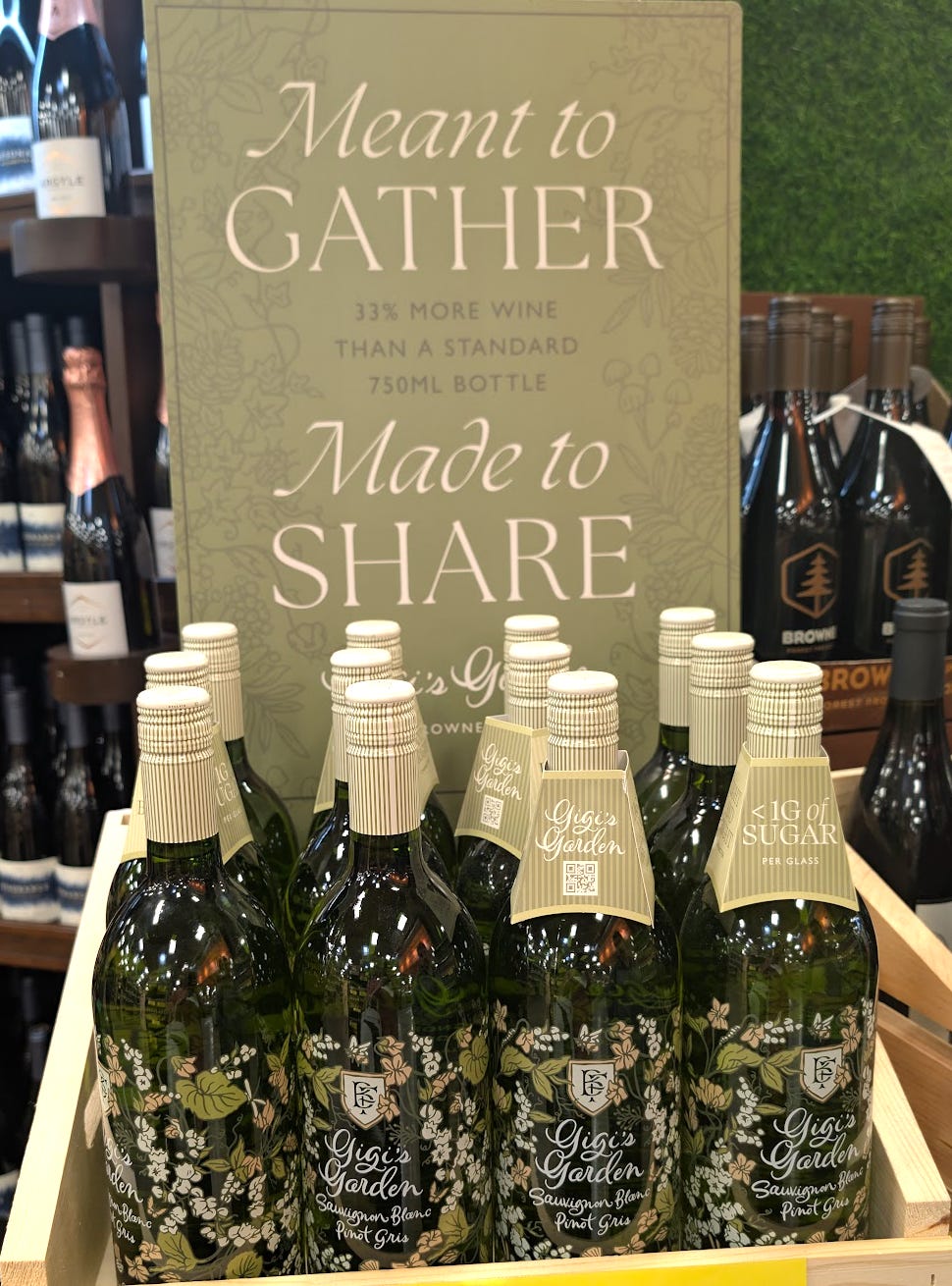
Then there’s Gigi’s Garden Sauvignon Blanc, a 1L bottle with screen printing (an expensive process) and a shelf talker that says “33% more wine than your typical 750mL bottle. Made to Share.” Premium positioning with a bigger format and eye-catching design.
I think I’ve spent most of my wine life in the DTC world because I really love to hear the stories of the labor that goes into the glass. I want to hear about the impact of weather that year, what challenges they faced, and how those challenges are expressed in the wine. I love tasting wine and thinking about what was going on in the world when those grapes were growing. This is a very different wine buying experience. Standing in the Fred Meyer wine aisle, holding a stubby bottle of non-vintage wine, I realized that there is a whole world of decisions that go into a bottle of wine that are beyond the type of grape, the timing of harvest, or the selection of maturation vessel. Packaging is a big part of the story and how the winemaker wants you to experience their product.
I’m not going to change my buying decisions based on this information. But I am more conscious now of the business of wine, the choices that get made long before the wine hits the shelf. The Bay Bridge bottle taught me that even a $4 bottle of chardonnay has a story. It’s just a different kind of story. One about logistics and scale and optimization and getting wine to people who want it at a price they can afford.