
Kimmeridgian calcareous marl is a mouthful and it sounds like a cough syrup. It’s actually the bedrock under the Côte des Bar, the southern outpost of Champagne in the Aube department. The soil in this corner of Champagne is more closely to Burgundy than to the rest of the Champagne AOC. Located about 150km south of the epicenter of Champagne at Epernay, it grows some of Champagne’s ripest Pinot Noir.
What the rock actually is
The name breaks into three parts:
Kimmeridgian is from the Late Jurassic, roughly 150 million years ago. It takes its name from Kimmeridge, a village on the Dorset coast where the layer is exposed. Back then much of northern France sat under a warm, shallow sea.
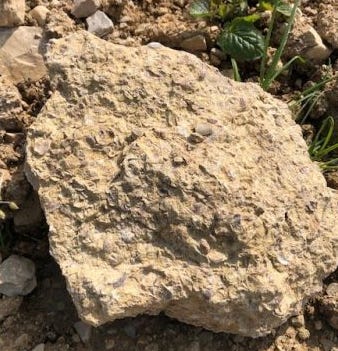
Calcareous means rich in calcium carbonate, made from discarded seashells over millenia. The Kimmeridgian layer is packed with fossils of tiny comma-shaped oysters.

Marl is a crumbly mix of clay and limestone. The clay holds water through dry spells; the limestone keeps the soil cool and well drained.
The Champagne most people picture, around Reims and Épernay, sits on chalk. That chalk is Cretaceous, laid down tens of millions of years later. It is soft, white and porous, and the famous cellars are carved into it.
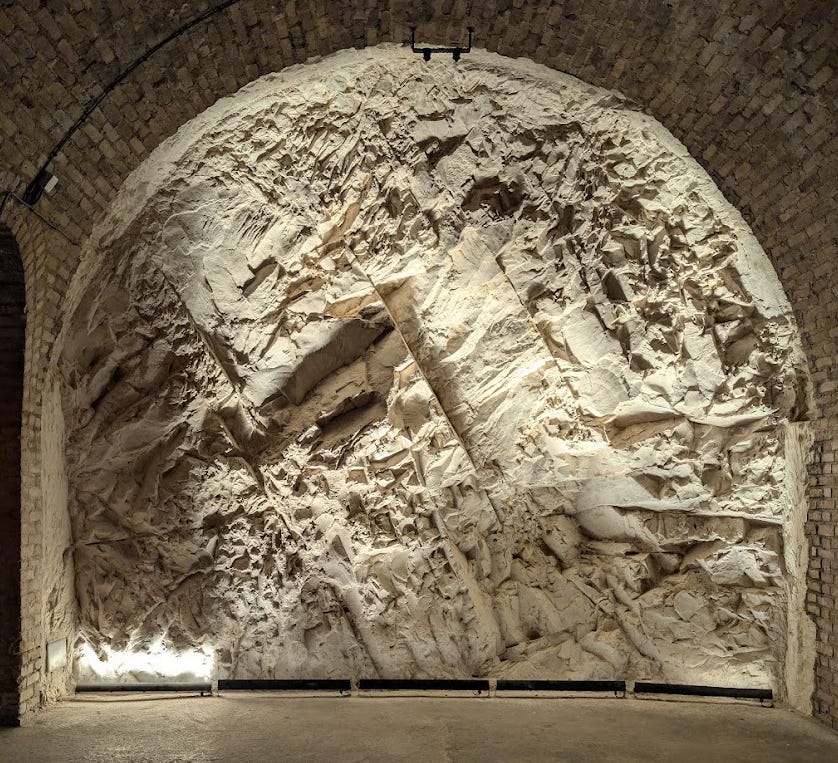
The Côte des Bar has no such chalk. Its slopes are Kimmeridgian marl capped with harder Portlandian limestone. That is the same sequence you find in Chablis, an hour’s drive south, and in Sancerre in the Loire. Geologically, the Côte des Bar is a cousin of Burgundy that happens to make Champagne.
Closer to Chablis than to Épernay
The Côte des Bar sits around 150 km south of Épernay, clustered around two towns, Bar-sur-Seine and Bar-sur-Aube. Chablis is much closer than the heart of Champagne.
That distance matters in a region that spends most years trying to get grapes ripe. Champagne is one of the coldest places on earth to grow wine grapes commercially. A bit further south means a bit more warmth can be captured on the steep, sun-facing slopes of the Aube.
The result is that Pinot Noir ripens more reliably than in the more northern villages of Champagne. The Côte des Bar now accounts for roughly a quarter of all Champagne vineyards.
The village of Les Riceys even makes a still pink wine, Rosé des Riceys, which only works if your Pinot Noir gets properly ripe.
Written out of Champagne
In 1908, the French government drew the first legal boundary around Champagne, and the Aube was on the wrong side of it.
The decree of 17 December 1908 limited Champagne to vineyards in the Marne and Aisne. That left out the Aube, and with it Troyes, the historic capital of the Champagne province. This would be similar to Napa being left out of a Californian designation.
The timing was brutal. Growers across the region had just spent years and fortunes replanting after phylloxera, and had a run of terrible harvests. Some of the big houses were increasing their volumes with cheaper grapes from outside the designated zone, including from the Aube, and everyone was feeling cheated. The Northern growers felt the competition lowering the prices they could command, and the more Southerly growsers felt they should be given the respect and recognition of being a part of the Champagne region.
In 1911 there was literal riots. Northern growers were blocking shipments of grapes from outside the region, leading to a new law barring the use of grapes not grown in Champagne. In the spring, growers protested the continuing exclusion of the Aube region from Champagne, saying:
Champenois nous fûmes, Champenois nous resterons
”Champenois we were, Champenois we will remain”
On the other side, the growers in Champagne protest the inclusion of the Aube, and they start attacking the merchant houses importing those grapes. These protests and counter protests continue until a compromise is reached giving the Aube recognition as a second zone. Its not until 1927 that a new law formally recognizes the region as part of Champagne.
Paid by the percentage
Getting back into Champagne did not mean getting paid like Champagne.
For most of the twentieth century, grape prices ran on the échelle des crus, a ladder that rated every village by percentage. Each year a benchmark price per kilo was set, and growers were paid their village’s share of it:
Grand cru villages would receive 100%
Premier cru villages receive 90–99%
Everyone else would see 80–89%
The Côte des Bar has no grand cru or premier cru villages, so its growers sat at the bottom of the ladder, selling some of the region’s ripest Pinot Noir at a discount.
The percentage system was dropped as a pricing tool in 2010, and grape prices are now negotiated more freely. The cru labels survive, though, and the Côte des Bar still has none. A wave of grower Champagne from the Aube has since made the case on its own labels.
Different rock, different climate, different history
The rock says Burgundy. The climate says reliably ripened Pinot Noir. The law said “not Champagne” then “fine, Champagne”. The price ladder kept it at a discount for decades after that.
Next time a Champagne label says Aube, Les Riceys or Côte des Bar, you are drinking from the southern edge of a very old sea, and from the losing side of a very long argument that turned out to be right.
Sources
Thanks for reading our Sip Notes! If you are as nerdy as we are about wine, you might be interested in downloading MySipNotes, now available for iOS and Android. MySipNotes is a personal wine catalog where you can snap a pic of a special bottle, mark which are your favorites, and add details, like tasting notes and who you shared it with.